Distributed inference is the practice of running a single AI model across multiple GPUs instead of one, splitting either the model's layers, the computations inside those layers, or the incoming requests so the workload isn't limited by a single device's memory or processing capacity.
It's common, and often necessary, for large language models (LLMs) that exceed a single GPU's memory or for deployments that need to serve high request volumes, though production systems use a range of architectures beyond single-model sharding, including replicated model instances and data parallelism, often in combination.
Why One GPU Often Isn't Enough
Memory, not raw compute, is usually the first constraint teams run into.
A 70-billion-parameter model stored at 16-bit precision (FP16 or BF16) requires roughly 140 GB just to hold its weights. That exceeds what a single commonly deployed A100- or H100-class GPU provides: the A100 commonly tops out at 80 GB, and while some H100 configurations offer more, none of the widely deployed single-GPU configurations reach 140 GB.
Weights alone. The key-value (KV) cache adds more as context grows.
Add the key-value (KV) cache, which stores attention states for every token during generation and grows with context length, and memory pressure builds further as conversations or documents get longer. This is why serving a model like Llama 3.1 70B at 16-bit precision typically means splitting it across two or more GPUs from the outset, rather than an optimization applied later.
Quantization, which stores weights in lower-precision formats such as 8-bit or 4-bit instead of 16-bit, reduces this memory footprint substantially.
But it doesn't eliminate the underlying problem for the largest models, and it comes with its own tradeoffs in output quality and serving-stack compatibility. For frontier and near-frontier open models, splitting the model across GPUs remains the standard way to make serving possible at all.
The Two Core Techniques
Distributed inference generally relies on two parallelism strategies, often combined in the same deployment. Both split the same model, but they divide it along different lines and trade off different things.
Tensor Parallelism
Tensor parallelism splits the mathematical operations inside individual layers across GPUs, dividing weight matrices row-wise or column-wise so multiple devices compute a share of the same layer at the same time.
Originally introduced through Nvidia's Megatron-LM framework, this approach reduces the latency of a single request because GPUs process the same layer in parallel rather than in sequence.
The tradeoff is communication overhead: GPUs must exchange and combine partial results after every layer, which requires high-bandwidth interconnects such as NVLink or InfiniBand to avoid becoming the bottleneck itself.
Pipeline Parallelism
Pipeline parallelism takes a different cut, assigning different layers to different GPUs rather than splitting operations within a single layer, so the model runs like an assembly line where one device handles an early group of layers and passes its output to the next device in sequence.
Because devices only need to pass intermediate activations at each stage boundary, rather than synchronizing every operation, this method generally demands less frequent communication between GPUs than tensor parallelism does, which can make it more practical across slower or more geographically separated network links.
It comes with its own costs, though: pipeline bubbles, where later stages sit idle waiting on earlier ones to finish, stage imbalance when layer groups take uneven amounts of time to compute, and added latency for any individual request, since data has to travel through every stage in sequence before a response is complete.
Weighing the Tradeoffs
Neither technique is a clean fit for one scenario.
Tensor parallelism's frequent collective communication after every layer means it benefits strongly from high-bandwidth, low-latency interconnects such as NVLink or InfiniBand; without that kind of connection, the communication cost can outweigh the benefit of computing in parallel.
Pipeline parallelism's less frequent, stage-boundary-only communication makes it more tolerant of weaker or more distributed links, but its own costs, pipeline bubbles, stage imbalance, and added per-request latency, mean it isn't automatically the better choice just because the hardware is spread out.
Whether tensor or pipeline parallelism suits a given deployment better depends on the model architecture, batch size, latency targets, and the network topology actually available, not on request volume or throughput alone. Production systems frequently combine tensor, pipeline, data, sequence, and expert parallelism in the same deployment, choosing the mix based on those constraints.
How Splitting Workloads Affects Cost
The performance case for distributed inference is well documented in the systems literature. The cost case is less automatic: splitting a workload across more devices adds network traffic, scheduling and orchestration overhead, and potential idle capacity, any of which can raise cost rather than lower it.
Where distributing inference does reduce cost, it tends to do so through a few distinct mechanisms rather than as a default outcome of splitting a model.
Splitting a model makes it possible to serve models that simply don't fit on any single GPU, regardless of price. A model too large for one card's VRAM won't run there at all, so distributing it isn't an optimization so much as a precondition for serving it.
Distributed inference frameworks have also been extended well beyond datacenter GPUs. Research into serving large models on resource-constrained edge hardware has shown that a 70-billion-parameter model can be split across several ordinary CPU-based devices, none equipped with a GPU, using tensor parallelism combined with careful memory scheduling.
That's a meaningful feasibility result: models that otherwise couldn't run at all on such hardware become possible to serve. It's a different result from cost-efficient production serving, though.
In the cited work's emulated eight-device edge testbed, a 70-billion-parameter Llama 2 model produced tokens at roughly 26 seconds each, well outside what most production workloads would treat as acceptable latency.
The broader point holds regardless: distributed inference widens the range of hardware, including non-GPU and lower-cost devices, that can participate in serving a given model, even where the specific configuration needs tuning for how much latency a workload can tolerate.
Distributed inference also pairs naturally with quantization. Running a model at reduced precision shrinks its memory footprint, which means fewer GPUs, or less expensive ones, are needed to hold a given model once combined with parallelism.
None of this makes distributed inference cheaper by default.
Coordinating a distributed pipeline introduces its own scheduling and communication overhead, and problems like pipeline bubbles, network congestion, and underused capacity across a fleet can offset or exceed whatever savings come from reaching wider hardware.
Distributed inference tends to reduce cost specifically in deployments where it enables better use of hardware that would otherwise sit idle, cost more, or not be usable at all, rather than as an automatic consequence of splitting a model.
The actual economics in any given deployment depend on utilization, network conditions, latency targets, power draw, orchestration overhead, and the relative pricing of the hardware involved.
A Working Example: Serving Qwen3 Across a Distributed GPU Network
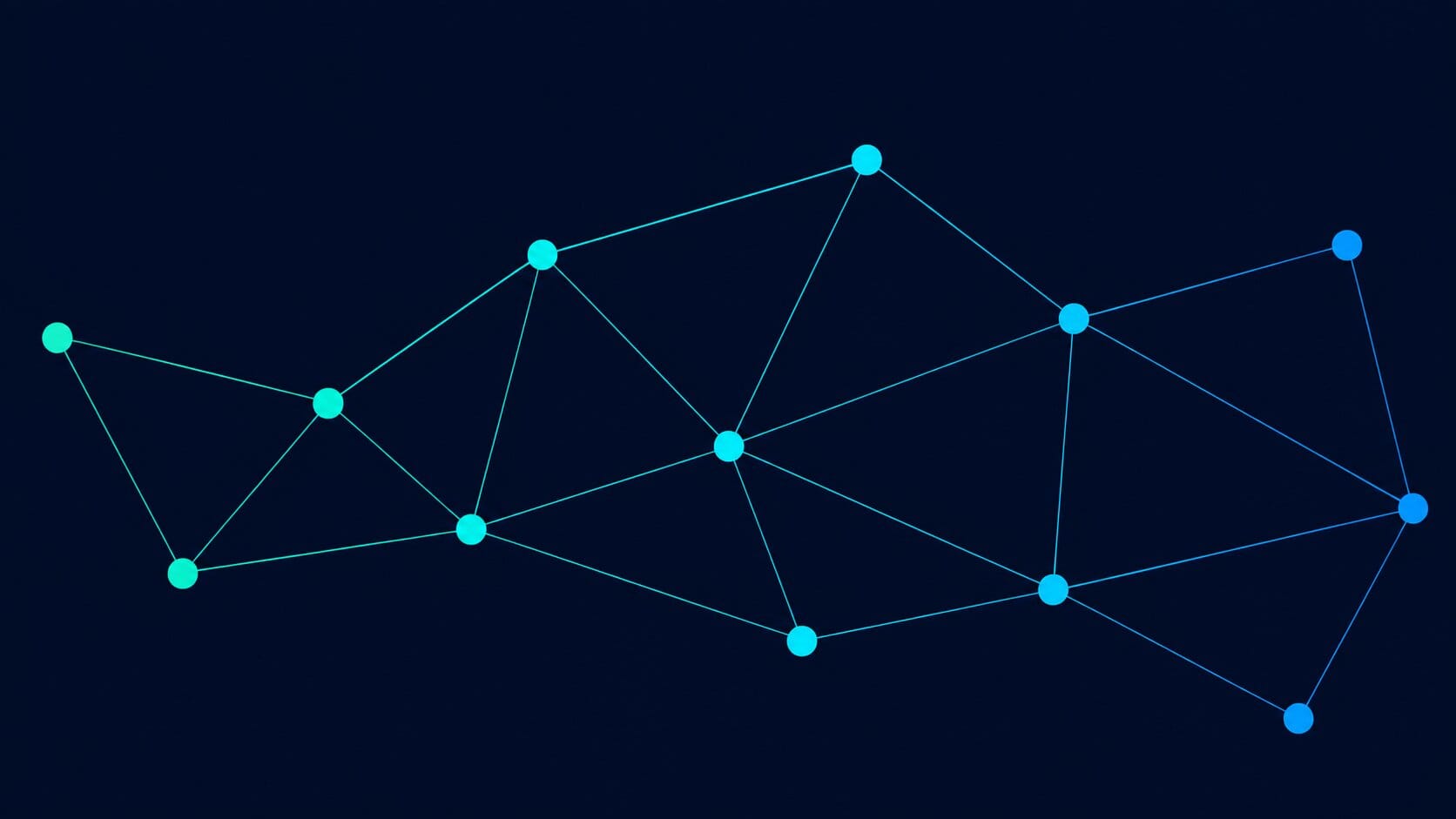
Theta EdgeCloud runs Alibaba's open-source Qwen3-32B model as an on-demand inference API, using Parallax, a distributed serving framework built by Gradient. Parallax uses pipeline parallelism, splitting the model into layer groups that run across separate GPUs, combined with a scheduler that continuously maps which layers can run on which nodes are currently available.
Because EdgeCloud's community GPU nodes vary in hardware, availability, and physical location rather than sitting in one uniform data center, the deployment runs several pipelines at once, so a node going offline doesn't interrupt inference: requests simply route to whichever pipeline is currently healthy.
A node going offline doesn’t interrupt inference: requests route to whichever pipeline is currently healthy.
Qwen3-32B is served in FP8 precision specifically because the reduced memory footprint makes it practical for consumer-grade GPUs, hardware that wouldn't have enough VRAM to participate at the higher-precision BF16 the model is also available in, to hold and process a share of the model.
Gradient's own published evaluation of Parallax, tested against HexGen, a state-of-the-art decentralized serving baseline, on real volunteer GPU nodes, reported up to 3.2x lower latency (averaging 1.66x across tested configurations) and up to 3.6x higher throughput (averaging 1.58x), with the largest gains concentrated in specific workload traces and request-rate combinations rather than holding uniformly across every setting tested.
Gradient’s own published evaluation of Parallax versus HexGen, on real volunteer GPU nodes. Largest gains were concentrated in specific workload traces and request-rate combinations.
How much of that improvement carries over to any specific deployment depends on the hardware mix and network conditions of that deployment, which is why Gradient frames the results as evidence that principled scheduling can make distributed compute a viable substrate for inference, not as a fixed guarantee.
When Distributed Inference Makes Sense, and When It Doesn't
Splitting a model across GPUs isn't the right call for every workload. Before reaching for tensor or pipeline parallelism, it's worth checking a few things.
Putting It Together
Splitting AI workloads across GPUs addresses two problems that often show up as a single symptom: a model that's too slow or too expensive to serve well.
Tensor parallelism and pipeline parallelism solve for memory and latency constraints in different ways, and neither is free of tradeoffs.
Combined with quantization and, in some deployments, heterogeneous or distributed hardware pools, these techniques make it possible to serve large models on infrastructure that a single-GPU approach couldn't touch, whether that's a pair of data-center GPUs or a distributed network of community-contributed nodes.
Developers who want to see this in practice can explore Theta EdgeCloud’s on-demand model APIs, including Qwen3-32B.